
How to Choose the Right Cement Bag Packing Machine for Your Manufacturing Plant
Selecting the right cement bag packing machine directly impacts plant dispatch speed, bag weight accuracy, and dust-free operation. Here is how plant engineers evaluate spout count, feeding technology, and upstream integration.
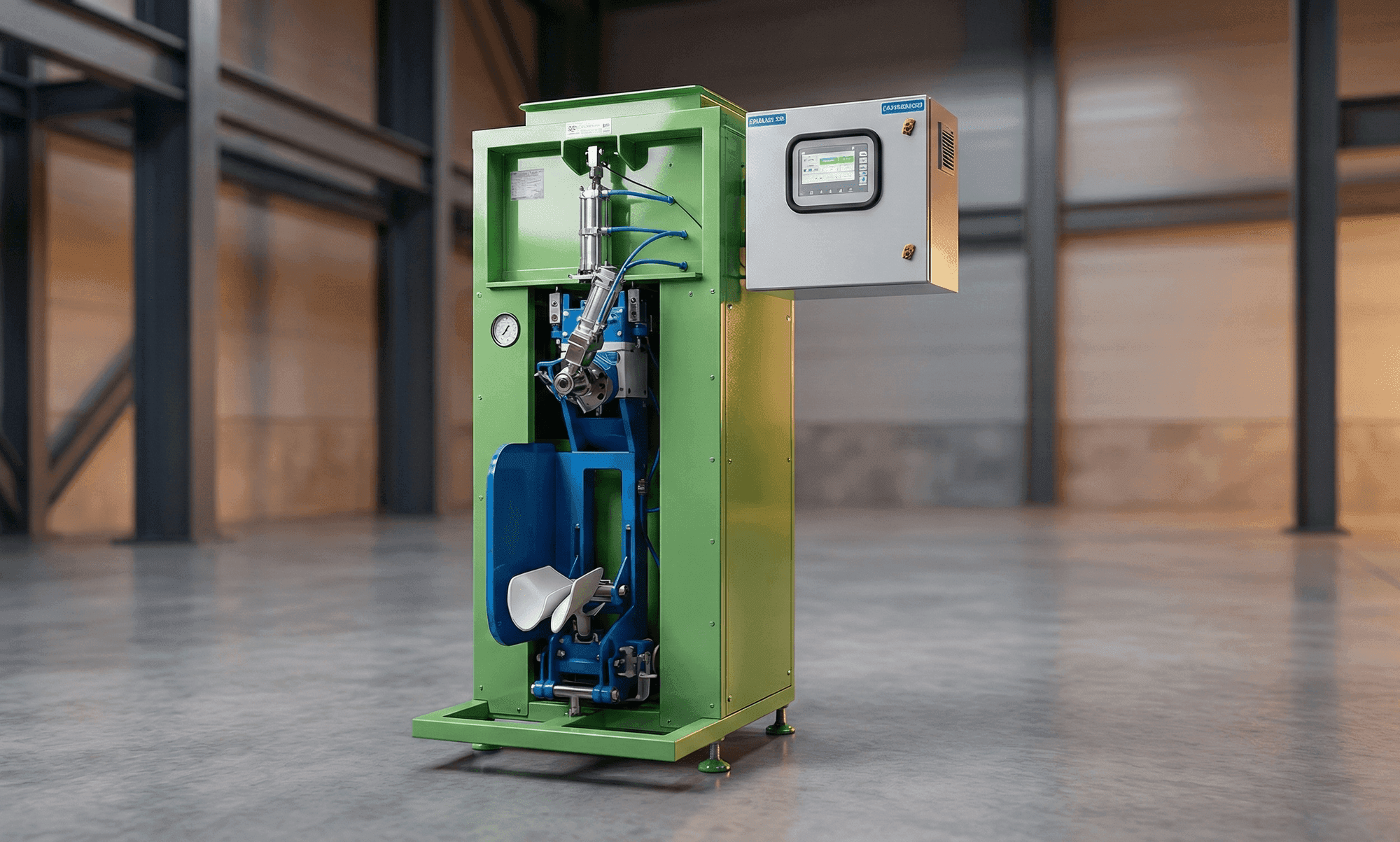
1. Match Spout Configuration to Your Target Bags-Per-Hour (BPH)
The first engineering decision when specifying a cement bagging machine is required hourly dispatch capacity. Undersizing creates truck-loading bottlenecks at the packing house, while oversizing increases capital cost and compressed air consumption unnecessarily.
R.S. Enterprises manufactures stationary impeller-based Valve Type Packers in three modular configurations so grinding units and clinker-packing plants can scale output cleanly:
| Model | Spout Configuration | Output Capacity | Typical Plant Fit |
|---|---|---|---|
| RSIP-001 | Single Spout Valve Packer | 300 – 350 Bags / Hr | Mini cement plants, fly ash & putty units |
| RSIP-001.2 | Double Spout Valve Packer | 600 – 700 Bags / Hr | Mid-size cement & drymix bagging lines |
| RSIP-001.3 | Triple Spout Valve Packer | 900 – 1,050 Bags / Hr | High-throughput cement dispatch terminals |
2. Why Impeller Valve Type Packers Are Standard for Cement
Ordinary Portland Cement (OPC), Portland Pozzolana Cement (PPC), and fly ash are aerated, fine powders that flow rapidly when fluidized. A Valve Type Packer uses a high-speed rotating impeller inside a wear-resistant casing to propel material through the filling spout into a self-sealing valve bag.
Because the valve sleeve seals automatically under internal powder pressure upon discharge, no secondary bag stitching machine is required—cutting labor, thread consumables, and floor space compared to open-mouth lines.
- Self-sealing valve bags eliminate downstream stitching or heat-sealing stations.
- Electronic load-cell weighing with coarse/fine cutoff maintains consistent 50 kg bag weights.
- Pneumatic bag clamping and automatic bag ejection reduce operator fatigue and spillage.
3. Verify Upstream Silo, Aeration, and Weigh Feeder Integration
Even the fastest cement bag packing machine cannot hit rated BPH if material starves or bridges in the surge hopper above the packer. Proper upstream engineering is essential:
Cement should feed from an Industrial Storage Silo (10–50 MT or larger plant silos) fitted with fluidizing aeration pads and level indicators, through a rotary airlock or controlled feeder into the packer surge bin. For blended cements or drymix formulations, an upstream Belt Weigh Feeder (5–80 TPH) ensures accurate proportioning before bagging.
4. Evaluate Spare Parts Availability and Serviceability
Cement is abrasive. Impeller blades, shaft seals, filling spouts, and pneumatic cylinders experience continuous wear. Always verify that OEM replacement parts—including hardened impeller blades, Festo/Shavo pneumatic valves, and calibrated load cells—are stocked locally by the manufacturer for rapid dispatch.
Recommended R.S. Enterprises Machinery
Frequently Asked Questions
What is the output capacity of a 2-spout cement bag packing machine?
A Double Spout Valve Type Packer (Model RSIP-001.2) typically delivers 600 to 700 bags per hour for standard 50 kg cement bags, depending on material aeration and operator bag-placement rhythm.
What bag type is used with a cement valve packer?
Valve-type cement packers use laminated or woven PP/HDPE valve bags or multi-wall kraft paper valve bags with an internal self-closing sleeve.
Can R.S. Enterprises supply a complete cement packing plant?
Yes. R.S. Enterprises engineers turnkey cement packing plants including silos, aeration systems, bucket elevators, valve packers, bag conveyors, and dust collection.
Need Engineering Guidance for Your Packing Line?
Share your material, bag weight, and target bags/hour with R.S. Enterprises engineers for a tailored machine recommendation.